Dark matter - An introduction to this matter
- Introduction:
If you have ever been curious enough to seek out information about the cosmos, it is impossible not to have heard of "dark matter." It accounts for approximately 23% of our universe, and according to current theories, its role is akin to a binding agent that holds all matter together and prevents it from dispersing. It is a relatively recent concept, first proposed in 1930. Since then, the theory has evolved significantly and spawned numerous other hypotheses regarding outer space, how it functions, and what lies hidden among the stars and galaxies.
The first to present evidence supporting this theory was the Dutch astronomer Jan Hendrik Oort, who studied the motion of stars within the Milky Way. He observed, to his surprise, that the total mass of the galaxy's stars and gas could not account for the necessary gravitational force, particularly regarding stars located at the periphery.
Note: Here, we must draw upon our knowledge of the theory of general relativity. As we know, black holes possess enormous mass; naturally, stars in their immediate vicinity ought to move at higher speeds, with this effect diminishing as one moves further outward. Yet, this is not the case. Stars orbiting at the periphery travel at nearly the same speed as those located, for instance, in the central region.
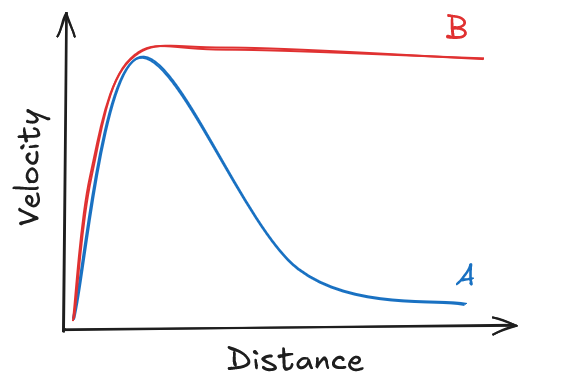
A year later, the Swiss astronomer Fritz Zwicky observed the same phenomenon in another experiment, using the Coma galaxy cluster. An unknown force was holding them together, boosting their speed. Their combined mass would not have been sufficient to produce this effect; consequently, the existence of dark matter was once again postulated: matter that we cannot see and that does not interact with other bodies.
- What is dark matter?
I know the idea of "dark matter" sounds very interesting, even exotic, but I really ought to explain the concept, shouldn't I? Well, it’s not quite that simple. The truth is that we don't know for certain what it is exactly. We do, however, know what dark matter is NOT.
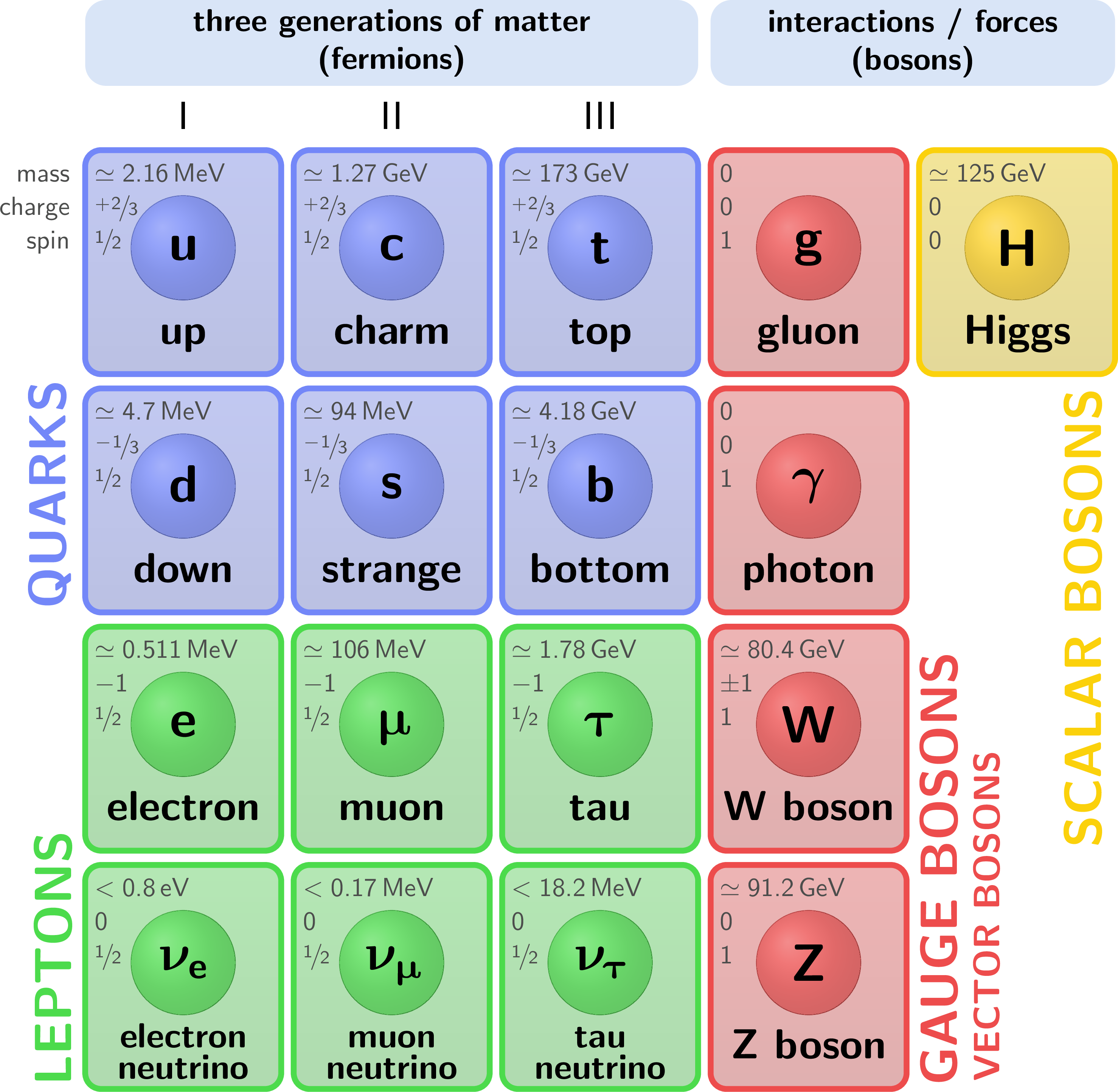
First, dark matter cannot be composed of baryonic structures, that is, protons, electrons, or neutrons. I’m sure that was clear from the start; however, it is worth noting that before searching for new particles to explain the extra gravity, we first turned our attention to celestial bodies like brown dwarfs, which emit very little light. That theory, however, was quickly dismissed.
Secondly, this mass must not interact with light. Again, this idea stems from the very name of the phenomenon, the fact that it is "dark." The only way we can identify it is through gravity.
In addition to these characteristics, dark matter must be electrically neutral (so that it does not interact with other states of matter) and likely possess an extremely small mass. We must remember that this mass exists everywhere; if we haven't managed to identify it yet, it implies the particles must be unimaginably small, allowing them to pass right through the structure of objects. To visualize this, we can use the mesh of a sieve to represent the space between atoms. Just as air passes through a kitchen sieve, dark matter would pass through any object,
entity, or celestial body without causing any observable interaction. That is just how small these particles would have to be.
- “Candidates” for dark matter:
Well, do not think that we have absolutely no idea what is going on. There are numerous (theorized) particles that are genuine candidates for these vacancies. Among them are WIMPs (Weakly Interacting Massive Particles), axions, gravitons, and (sterile) neutrinos. And now, if I may, I will give you a brief overview of them.
- WIMPs: particles that neither emit nor absorb light. Theoretically, they possess considerable mass, which facilitates the emergence of a much stronger gravitational force;
- Axions: these are particles with very low mass that would perfectly meet the previously mentioned criteria; however, this very low mass makes it unlikely that their abundance in the universe is sufficient to explain the vast discrepancy between visible and invisible matter;
- Gravitons: these represent a fascinating concept. An interesting fact: these particles could provide the necessary link between the theory of relativity and quantum physics, though, unfortunately, I will not delve into that topic here. Gravitons are defined as hypothetical particles that mediate gravity, and their mass could account for the excess mass we detect;
- Neutrinos: these are particles whose actual existence has been demonstrated and confirmed. The issue with them is that they can interact with various atomic nuclei. Consequently, a specific type, the sterile neutrino, was theorized; this particle does not interact with any other form of matter.
I reiterate that these are merely theories. Matter could be composed of all the particles mentioned, or none of them. It is precisely these questions that make our existence more interesting.
- Detection:
It goes without saying that scientists are attempting to detect this strange form of matter. While gravitational effects give us high confidence that dark matter exists, that alone is not enough; we need to understand exactly what it is. Consequently, several strategies have been developed.
Direct detection relies on the premise that vast numbers of these particles are constantly passing through the Earth. By building large-scale detectors thousands of meters underground, we hope to capture a collision between a dark matter particle and an atomic nucleus. Indirect detection, however, appears more plausible; it is based on the possibility that the particles might annihilate one another, producing gamma radiation and antimatter particles. Another approach has been the attempt to produce dark matter in particle accelerators. Although none of these methods have yielded results so far, we can still hope that one day, we will uncover the true nature of this phenomenon.
- Conclusion and bibliography:
Ultimately, although dark matter may seem like a mysterious subject, it is by no means magic. Like any other obscure field of physics, it is a theory grounded in regions of the universe that remain unexplored and that we are still striving to understand. What matters is that we stay curious, look at the skies, and fear not to dream beyond what we believe to be possible.
- Dark Matter: A Primer (Garrett & Duda, 2010)
https://arxiv.org/pdf/1006.2483
- Dark Matter: A Brief Review (Annika Peter, 2012)
https://arxiv.org/pdf/1201.3942
- Dark Matter, Dark Energy, and Alternate Models: A Review (Kenath Arun, S. B. Gudennavar & C. Sivaram, 2017)